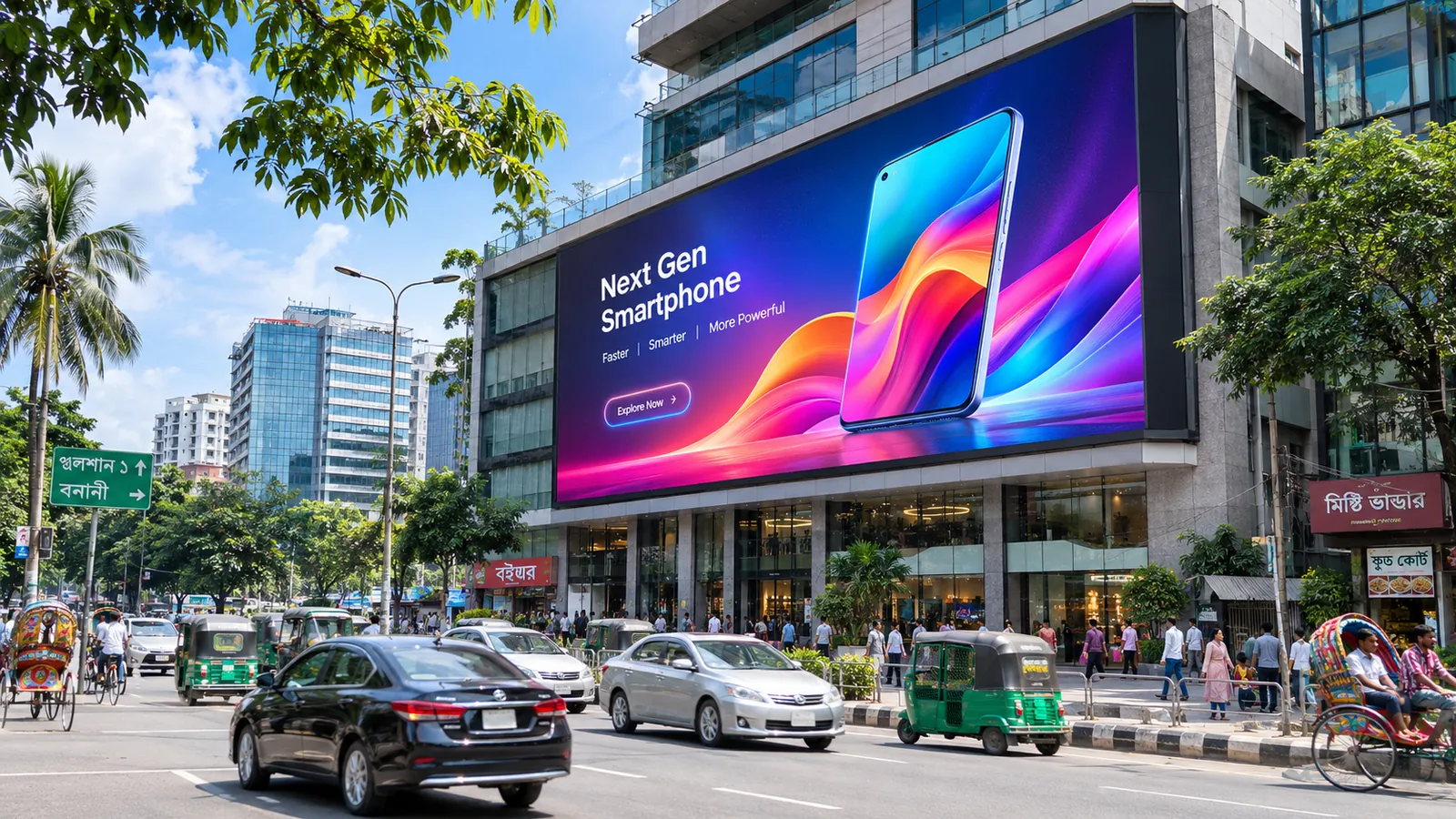
Which pixel pitch do I need?
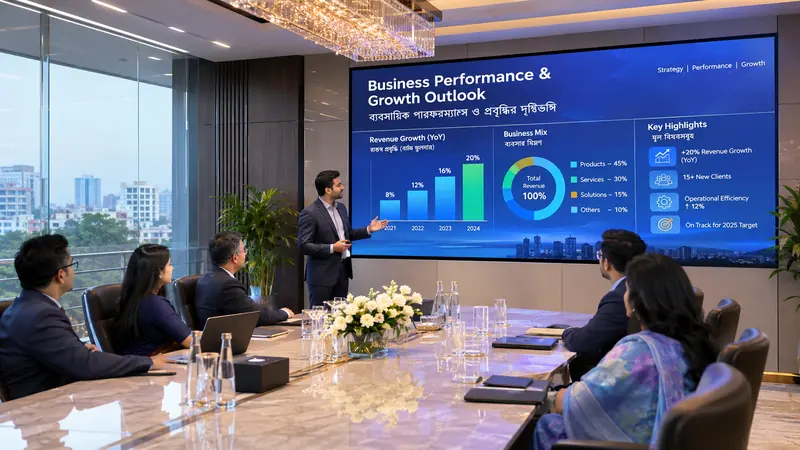
Pixel pitch is the distance between pixels. As a rule of thumb, the nearest viewer should stand at least as many metres away as the pitch in millimetres. A boardroom wall seen from 1.5 m suits 1.2 to 1.5 mm. A roadside billboard seen from 10 m or more suits 6.7 to 10 mm. The pitch finder on this page gives you a first answer.
Will an outdoor screen cope with monsoon rain and summer sun?
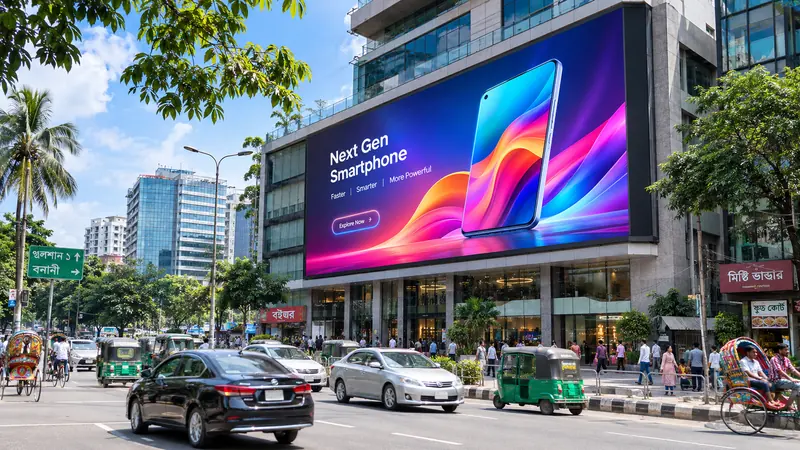
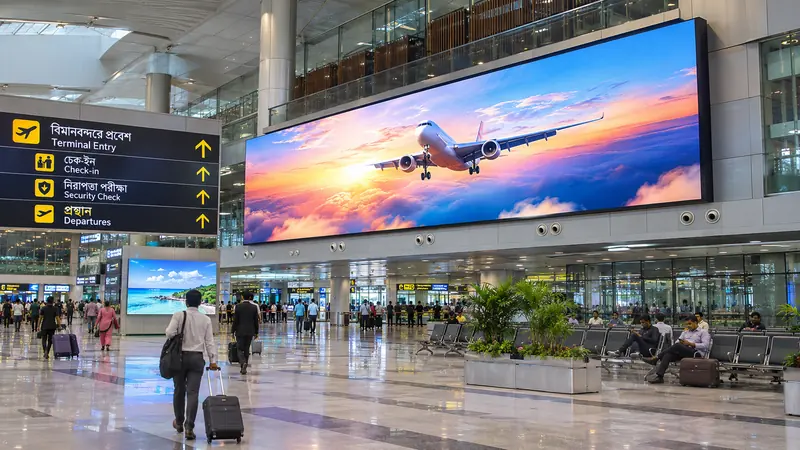
Lyn-OUT cabinets are sealed to IP66 at the front and the rear, which covers heavy rain and dust. Brightness of up to 10,000 nits keeps the picture readable in direct sunlight. These figures are indicative and are confirmed in your quotation.
Will the screen keep working through load-shedding?
The screen runs from your building's supply, so it stays on whenever your generator or IPS does. We size the electrical load for your backup, fit protected power supplies against voltage swings, and set the controller to restart cleanly after a changeover.
Do you install and service outside Dhaka?
Yes. We survey, install and service in all eight divisions, from Rangpur to Cox's Bazar. Spare modules are held in Bangladesh, so a repair does not wait for an import.
Can you quote in Taka for a company or a government tender?
Yes. Quotations are itemised in BDT with VAT invoicing, and we prepare the specification sheets, drawings and compliance tables a procurement committee asks for.
How much does an LED display cost in Bangladesh?
The price of an LED display or video wall depends on four things: the screen area, the pixel pitch (a finer pitch such as P1.5 costs more per square metre than P3.9 or P10), indoor or outdoor use, and the structure and installation. That is why we do not publish a price list. Send us the size and the location on WhatsApp or through the quotation form and you will receive a written quotation in Taka.
What is the difference between an indoor and an outdoor LED display?
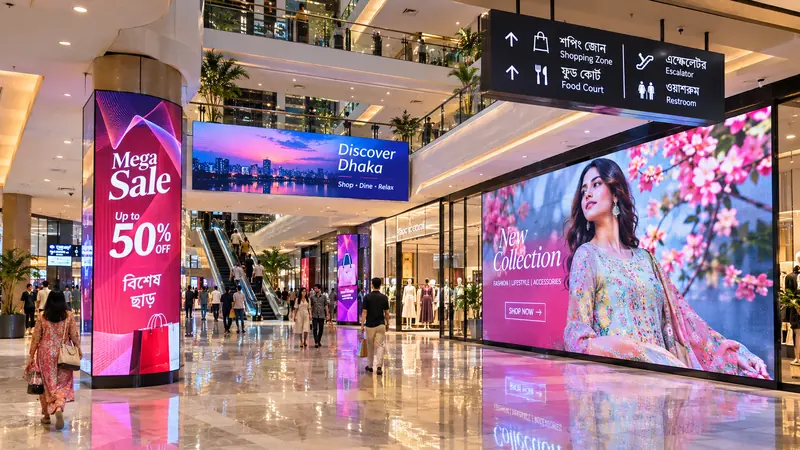
An outdoor LED display is sealed against rain and dust (IP65 or IP66) and is far brighter, up to 10,000 nits, so it stays readable in direct sun. An indoor LED screen needs around 500 to 1,500 nits and can use a finer pixel pitch, because people stand closer. Use Lyn-OUT for billboards and building facades, and Lyn-IN, Lyn-FP or Lyn-COB inside.
What is the difference between COB and SMD?
SMD screens use individually packaged LEDs soldered to the board. COB, or chip on board, mounts the LED chips directly and seals them under one continuous layer. That gives a smoother, tougher surface that wipes clean, which suits close viewing. SMD covers the widest range of pitches and budgets.
Can the screen be a custom size or shape?
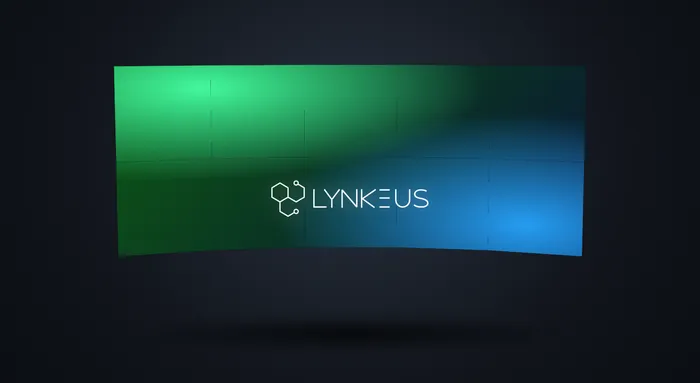
Yes. A wall is built from cabinets, so its size moves in cabinet steps. Lyn-CURVE bends up to 45 degrees per cabinet for columns and arcs, Lyn-IN and Lyn-OUT turn 90-degree corners, and Lyn-CLEAR mounts on glass.
How much power does a screen use?
It depends on the series, the brightness setting and the content. As an example, Lyn-OUT is rated at a maximum of 680 W per square metre and uses an energy-saving drive. Your quotation states the electrical load for your configuration.
Can I see the specification before asking for a quotation?
Yes. Every series page has an indicative specification table and a spec sheet you can download as a PDF.
What do you need from me for a quotation?
Whether the screen is indoors or outdoors, the width and height available, the nearest viewing distance and what the screen will show. The Display Architect turns that into a cabinet layout you can send with your request.